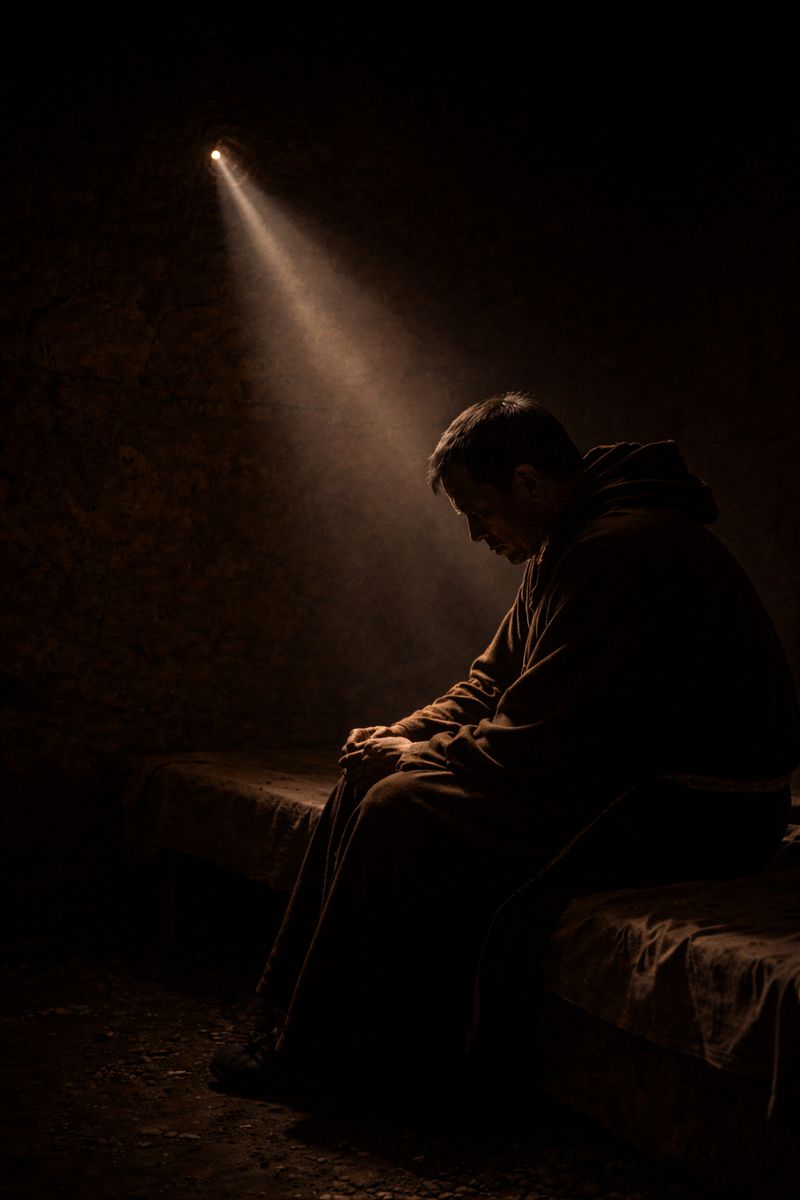
When Saint John of the Cross writes of the dark night of the soul, he is not describing an episode of spiritual melancholy, nor a temporary dryness remedied by better music, warmer fellowship, or heightened affect. He is naming a work of God upon the soul, a purgation that proceeds according to divine wisdom and not according to the psychology of man. The night is dark precisely because it removes what the soul has learned to rely upon, including the very experiences that once seemed religious.
This is the point modern Christians most often fail to grasp. They imagine religious vitality to consist in felt devotion, in movements of the passions, in emotional warmth produced by sound, repetition, and communal excitation. They speak of “feeling close to God,” as though proximity to the divine were registered in the nerves rather than established in the intellect and will. St. John does not deny that sensible consolations exist; he insists only that they are neither the measure of sanctity nor the mode by which God unites the soul to Himself in its maturity.
The dark night begins when God withdraws the supports that once assisted the beginner. Prayer becomes arid. Images lose their force. Music that once stirred devotion now leaves the soul untouched. This is not a failure in the soul. It is a transition in its education. God is teaching the soul to rest where sensation cannot follow.
St. John is explicit: the soul that continues to cling to sensible devotion at this stage hinders the work of grace. What once helped now obstructs. The imagination becomes a distraction. Emotional sweetness becomes a substitute for obedience. The appetite for experience quietly replaces the desire for God as He is in Himself.
This is where contemporary Christian song devotion reveals its poverty. Much of it is constructed to produce feeling through rhythm, repetition, and swelling harmony. The body is enlisted as an instrument of stimulation. The passions are moved deliberately. Tears, uplift, and warmth are treated as signs of divine presence. Yet St. John teaches that God often communicates most deeply when such signs are absent, and that attachment to them can delay purification.
He would recognize immediately what is taking place. The soul is being taught to confuse motion with union. The experience of religious feeling is taken as evidence of divine communication, when in fact it is often no more than a human response to carefully arranged stimuli. Music has always possessed this power. St. John knew it. The Church knew it. That is why the tradition exercised restraint. Sensation was not trusted to govern judgment.
In the dark night, God strips the soul of these crutches. He does so not out of severity, but out of love. He wishes to be known without intermediaries fashioned by human skill. He wishes to be received in faith, not tasted through emotion. The soul learns to remain in prayer without satisfaction, without imagery, without reward. This endurance is itself the work of grace.
St. John’s analysis is merciless toward religious self-deception. He warns that souls often mistake emotional fervor for progress, when in reality they are circling around themselves. They seek what consoles them rather than what conforms them. They prefer what feels holy to what makes them holy. The dark night dismantles this confusion by force of deprivation.
What would St. John think of Christian songs that aim to manufacture religious experience? He would see in them a pedagogy fit for beginners, and dangerous for those who mistake beginnings for completion. He would warn that the soul trained to expect God in sensation will resist Him when He comes in silence. He would recognize in the constant demand for emotional reinforcement a subtle refusal of the cross.
The night teaches another lesson as well: God is not absent when He is unfelt. He is often closer than ever. The soul that persists in faith without consolation is being drawn beyond the limits of natural operation. This cannot be dramatized. It cannot be staged. It cannot be enhanced by sound. It must be endured.
The tragedy of much modern devotion lies here. By teaching Christians to equate religious authenticity with emotional intensity, it leaves them unprepared for the very work by which God sanctifies. When dryness comes, they assume failure. When silence descends, they seek noise. When God withdraws sensible light, they light candles of their own making.
St. John offers no such remedies. He offers understanding, patience, and obedience. The night is not something to escape. It is something to pass through. It is the narrow corridor by which the soul is loosened from itself and made capable of God.
This is why his doctrine remains unsettling. It strips away comforting illusions. It denies the soul its favorite proofs. It teaches that holiness often advances under conditions that feel indistinguishable from loss. Yet this severity is truthful. God does not train His saints by indulging their senses indefinitely. He leads them into faith mature enough to stand without support.
The dark night, properly understood, judges our devotional culture without shouting. It simply reveals how much of what we call spiritual life depends upon what God eventually removes. And in that revelation, it offers the soul a more demanding, and far more real, hope.
